
Lebanon · 4 min read
Is the Helm business platform right for a business in Lebanon?
The short answer
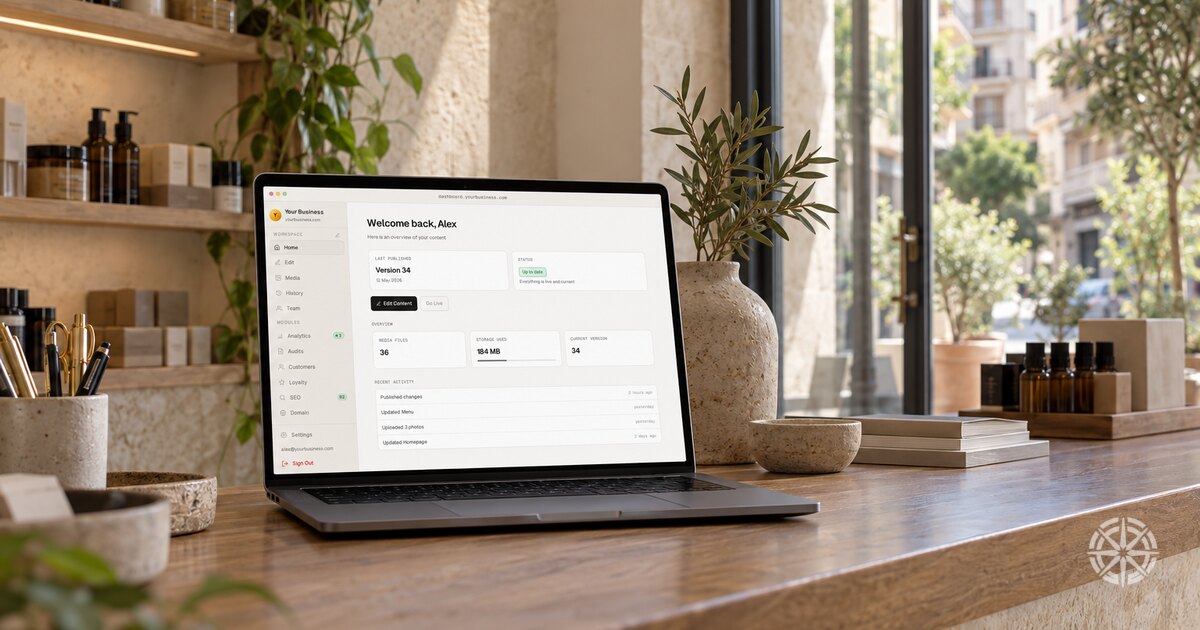
It fits if you are running the business itself — bookings, orders, customers and the payment methods people here actually use — rather than only publishing pages. The Helm business platform is one login for all of it, in Arabic and English. It is the wrong tool if you genuinely only need a brochure site.
On this page
Most tools sold to small businesses here are website builders. You get pages, a contact form, and everything that actually runs the business happens somewhere else — a booking app, a notebook, a WhatsApp thread, a spreadsheet of regulars.
The Helm business platform is built the other way round. The website is one output of it, not the whole of it.
Whether that suits you depends on a single question: does your business have things to run, or only things to show?
What "business platform" actually means here
A website builder gives you pages. A business platform gives you the operations behind them, with the pages as one view onto the same data.
In practice that means the booking someone makes on the site becomes a record you can filter, answer and keep. The order becomes a customer with a history. The loyalty card is not a paper stamp card that lives in a drawer. Everything is one login rather than four subscriptions that do not speak to each other.
If you have ever retyped a booking from one app into another, or looked for a regular's phone number in a WhatsApp search, you already know the cost this removes.
The payment question decides it in Lebanon
This is where tools built for other markets fall down, and it is the most common reason a business here abandons one.
Almost every platform assumes a card checkout. Here, a great deal of trade settles by Whish, OMT, bank transfer or cash on delivery. A checkout that only takes cards does not lose you a percentage — it loses you the order.
Helm's shop was built for money that settles outside the checkout. The buyer picks how they are paying, types the transfer reference, and you confirm it against your own statement before anything is dispatched. That is the actual sequence used here, rather than a card-first flow with a cash option bolted on the end.
The detail of how those methods compare is its own subject — taking online payments in Lebanon covers the ordering of it properly.
Arabic is not an add-on
A booking request records the language it arrived in, so the confirmation or the decline goes back out in that language. Somebody who wrote to you in Arabic and received an English reply has learned something about how you see them.
Numbers stay in Latin digits in both languages, deliberately — they are what people copy, dial and read back down a phone line.
If you are adding a second language to a site that already exists, the layout work is the real job and it is worth understanding before you commit to any platform.
What you actually get, by plan
The lower plan is the site and the basics. The middle one adds site audits, built-in analytics and SEO tools. The top one adds loyalty programmes and customer accounts.
That ordering matters more than the prices. Loyalty and accounts are the features that make a platform worth having over a builder, and they are the ones you grow into rather than start with. There is no point paying for customer accounts in month one if you have no repeat customers yet.
When Helm is the wrong choice
If you need a single page with your address, your hours and a phone number, this is more than you need. A brochure site is a legitimate thing to want, and a platform is overhead you will not use.
If your business runs entirely inside Instagram DMs and you are happy with that, a platform will not fix a problem you do not have yet. The honest trigger is the day the messages become more work than the trade is worth.
And if someone else already built you a site you are happy with, the sensible question is not whether to replace it — it is what to attach to it.
What it costs against what you are already paying
Add up the booking app, the commission a marketplace takes on your regulars, and the hours spent moving information between tools. Then compare.
Most businesses here are not choosing between Helm and nothing. They are choosing between one subscription and three, plus the retyping. What a website costs in Lebanon sets out what belongs in any quote, at any price.
The short version
The Helm business platform suits a business that has operations to run and wants them in one place, in two languages, with payment methods people here actually hold. It does not suit a business that needs a page.
If you are deciding, start with where your customer information currently lives. If the answer is four places, that is the problem worth solving — and where the site itself is hosted matters far less than people think.