
Memberships and courses · 4 min read
Do I need a separate loyalty app, or part of my website?
The short answer
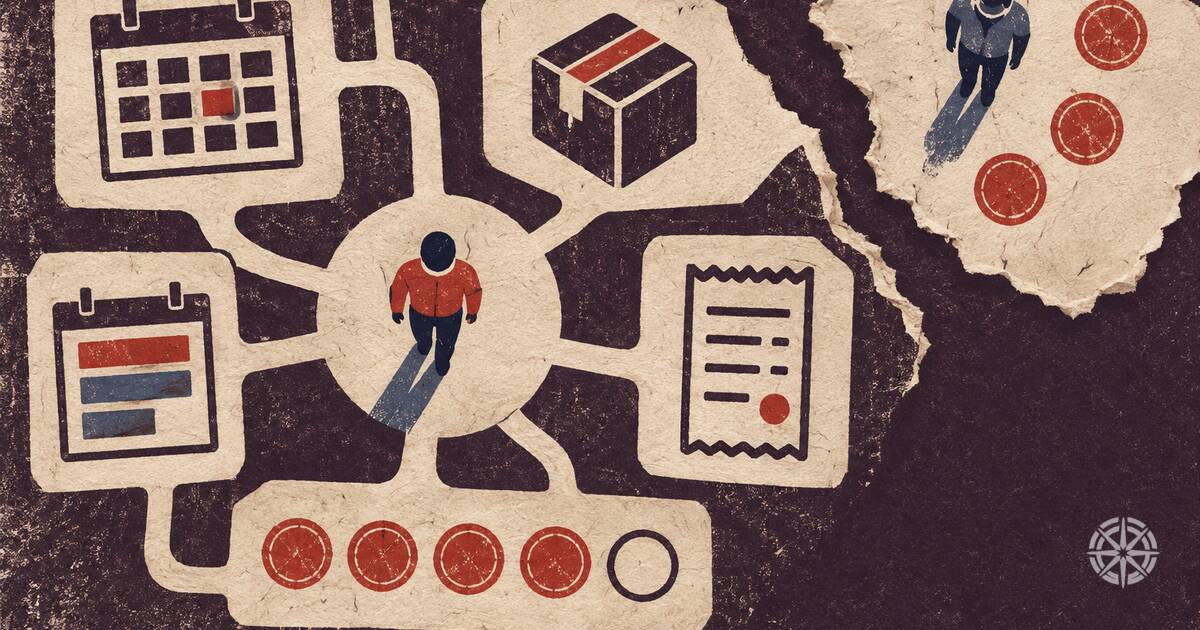
Ask where the customer record ends up. A separate app gives you stamps and a second login, and the people in it are invisible to everything else you run. If loyalty sits with your bookings and orders, the same customer is one person rather than three.
On this page
Most comparisons of loyalty apps are a feature grid, and the feature grids are nearly identical. Stamps, a reward, a card on a phone. Picking between them on features is picking between things that do the same job.
The question that actually has consequences is a different one: when somebody collects their tenth stamp, where does that person exist afterwards?
The second login is not the problem. The second island is
A separate loyalty app means another account, another password and another thing to check, and everyone notices that on day one. It is annoying and it is survivable.
What people do not notice until a year in is that the app has quietly become the only place some of your customers exist. The person who has been in twice a week since March is a row in a system that your booking page has never heard of and your order history cannot see. You cannot message them about a quiet Tuesday, because the list that knows they exist is not the list you send from.
That is the real cost, and it arrives slowly enough that nobody connects it to the decision that caused it.
What you actually need it to do
Strip the feature grids back and a small business needs four things:
- A mechanic. Stamps or points — pick one. Stamps suit a counter with a repeated purchase; points suit a varying basket.
- A threshold. How many earn the reward. This is the number you will change once you see real behaviour, so it should be easy to change.
- An expiry, or deliberately none. Stamps that never expire are a liability you are carrying forever. Stamps that expire too fast annoy the regulars you built it for.
- A way for staff to give and take stamps at the counter, in seconds, without a manager.
Everything above that is a nice-to-have. If a comparison table is selling you tiers and gamification before it has explained those four, it is selling you the wrong thing.
Who is holding the scanner
This is the detail that decides whether it survives a busy Saturday, and almost nobody asks it.
In some systems the customer scans a code to collect. In others the staff member scans the customer's card. They sound the same and they are not: one puts the work, the phone-fumbling and the queue on your customer at the till, and the other keeps it on your side of the counter where it takes a second.
Ask which one you are buying, and watch it happen once before you commit. On Helm it is your staff scanning the customer's card, which is the arrangement that holds up when there are six people waiting.
What it looks like when it is part of the site
On Helm, Loyalty & membership is a module in the same dashboard as everything else rather than a separate product. You choose stamps or points, set the threshold and an optional expiry, and staff get their own view for giving and redeeming at the counter.
Beyond the basic card there are real offer types rather than just a stamp count — buy-two-get-one for the pastry counter, and a double-stamp boost you can switch on for specific weekdays to move a slow Tuesday. Those exist because they are what cafés and salons actually run, not because they fill a feature grid.
The part that matters most is the boring one: the customer collecting stamps is the same customer record as the one who booked a table or placed an order. One person, one history, one list you can act on.
Being straight about what it costs: loyalty is included on the Business plan and is a paid add-on on the smaller ones. It is not free, and a stamp card that costs more than it returns is a bad trade — we wrote about whether a scheme is worth it at all before you spend anything on one.
When a separate app is genuinely the right answer
If you have no website worth speaking of, no bookings and no orders, then there is no record for loyalty to join, and the island problem does not apply. A standalone app is the cheapest way to start and you can move later.
Equally, if you already run a till system your staff know well and it has loyalty built in, adding a second scheme beside it is worse than either option alone.
How to decide, in one question
Look at the last customer who complained about something. Could you tell, in under a minute, what they had bought, whether they had booked before, and how many stamps they had?
If the answer lives in three places, that is what you are choosing between — not stamps. The shape that works for a coffee shop, a restaurant and a salon differs in the details, and the question underneath is the same one every time.